And yet, I assume they were thinking something, and it probably wasn't, “This will show those Reds what the Good Life looks like.” In fact, when I try to come up for explanations for their tastes, none of the fashionably political theories even make the top ten.
Here are my prime candidates for why I think they ate like that:
Explaining the food of yesteryear doesn’t require exotic theories about culture and politics. It mostly requires understanding the economics of food production and distribution, and the path dependence of culinary choices. The past is indeed another country, and like every country, it had its own cuisine that made the most of local resources.
- Most people are not that adventurous; they like what's familiar. American adults ate what they did in the 1950s because of what their parents had served them in the 1920s: bland, and heavy on preserved foods like canned pineapple and mayonnaise.
- A lot of the ingredients we take for granted were expensive and hard to get. Off-season, fresh produce was elusive: The much-maligned iceberg lettuce was easy to ship, and kept for a long time, making it one of the few things you could reliably get year round. Spices were more expensive, especially relative to household incomes. You have a refrigerator full of good-looking fresh ingredients, and a cabinet overflowing with spices, not because you’re a better person with a more refined palate; you have those things because you live in 2015, when they are cheaply and ubiquitously available. Your average housewife in 1950 did not have the food budget to have 40 spices in her cabinets, or fresh green beans in the crisper drawer all winter.
- People were poorer. Household incomes grew enormously, and as they did, food budgets shrank relative to the rest of our consumption. People in the 1960s also liked steak and chicken breasts better than frankfurters and canned meats. But most of them couldn’t afford to indulge their desires so often.
The same people who chuckle at the things done with cocktail franks and canned tuna will happily eat something like the tripe dishes common in many ethnic cuisines. Yet tripe has absolutely nothing to recommend it as a food product, except that it is practically free; almost anything you cooked with tripe would be just as good, if not better, without the tripe in it. If you understand why folks ate Trippa alla Romana, you should not be confused about the tuna casserole or the creamed chipped beef on toast.- The foods of today’s lower middle class are the foods of yesterday’s tycoons. Before the 1890s, gelatin was a food that only rich people could regularly have. It had to be laboriously made from irish moss, or calf’s foot jelly (a disgusting process), or primitive gelatin products that were hard to use. The invention of modern powdered gelatin made these things not merely easy, but also cheap. Around 1900, people were suddenly given the tools to make luxury foods. As with modern Americans sticking a flat panel television in every room, they went a bit wild. As they did again when refrigerators made frozen delights possible. As they did with jarred mayonnaise, canned pineapple, and every other luxury item that moved down-market. Of course, they still didn’t have a trained hired cook at home, so the versions that made their way into average homes were not as good as the versions that had been served at J. P. Morgan’s table in 1890. But it was still exciting to be able to have a tomato aspic for lunch, in the same way modern foodies would be excited if they found a way to pull together Nobu’s menu in a few minutes, for a few cents a serving.
Over time, the ubiquity of these foods made them déclassé. Just as rich people stopped installing wall-to-wall carpeting when it became a standard option in tract homes, they stopped eating so many jello molds and mayonnaise salads when they became the mainstay of every church potluck and school cafeteria. That’s why eating those items now has a strong class connotation.- There were a lot of bad cooks around. These days, people who don’t like to cook, or aren’t good at it, mostly don’t. They can serve a rich variety of prepared foods, and enjoy takeout and restaurants. Why would you labor over something you hate, when someone else will sell you something better for only slightly more than it would cost you to make something bad?
In 1950, the answer was “because we’re not made of money.” A restaurant meal was a special treat, not a nightly event, and prepared foods were not so widely available, in part because women tended not to work, but also because food processing technology was so advanced. So women had to cook whether they liked it or not. Many of them didn’t like it, so they looked for ways to reduce the labor involved. And it’s far from obvious that what they did with those shortcuts was worse than what they would have done without them. Think of the kind of casserole a bad cook might have made without canned soup and frozen vegetables. She’d probably have boiled the vegetables, because that’s the easiest way to prepare them, and boiled them to death, because she wasn’t too fussy about timing. (Out of season, those vegetables would have been limited to a few hearty root vegetables.) If there was a sauce, it probably would have been horrible. Let’s not even start on what she might have done with the meat. Canned soup and frozen vegetables start sounding pretty good.
That was the baseline most people were working off. They were not comparing what they ate to what they might have gotten at a good restaurant; they were comparing it to what they would have gotten without the shortcuts, because, to reiterate, most of them rarely ate at a good restaurant.
Modern food writing has an enormous selection bias. The median cookbook reader is a much better cook, and much more interested in food, than the median audience of recipes from decades past. The bad cooks, the indifferent cooks, the folks with the cast iron palates and Teflon stomachs, are all off doing something else. And since good cooks tend to raise good cooks, the median food writer waxing lyrical about Grandma’s homemade beef stew doesn’t realize just how many bad cooks were around. Or that recipes needed to be written for them, because however limited their talents or interest, they still had to put a meal on the table every night. A lot of terribly mediocre recipes are floating around from the era, and that’s exactly what most of the terribly mediocre cooks were looking for.- Look at the sources of our immigrants. Immigration is still the major way that countries get new foods (if you don’t believe me, go out for Mexican food in any European country and report back). With the notable exception of the Italians, in the 19th century, most immigrants were from places with short growing seasons and bland cuisines, heavy on the cream and carbohydrates. After we restricted immigration in the 1920s, that’s what we were left with until immigrants started coming again in the 1960s. Of course, Louisiana had good French food, California and Texas had a Mexican influence, but by and large what we ate in 1960 was about what you’d expect from a German/English/Irish/Eastern European culinary heritage, adapted for modern convenience foods. And people liked it for the same reason I like jello salad: It’s what they were used to.
- Entertaining was mandatory. Because people didn’t go to restaurants so much, they spent time having people over, or eating at someone else’s house. If someone had you over, you had to have them over. This meant people had to have “company dinners” they could make, or at least a stock of canapés they could throw together for a cocktail party, even if they weren’t very good at it. Cue the weird focus on prettying everything up, more than occasionally to the detriment of the food itself: if you can’t make it good, you can at least make it pretty, to show people you made an effort.
Showing posts with label cooking. Show all posts
Showing posts with label cooking. Show all posts
Wednesday, February 01, 2017
Friday Food Post: The Economics Behind Grandma's Tuna Casseroles - Bloomberg View
Friday Food Post: The Economics Behind Grandma's Tuna Casseroles - Bloomberg View


Saturday, August 02, 2014
Wednesday, August 08, 2012
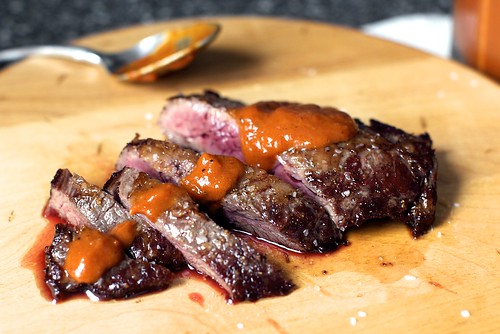
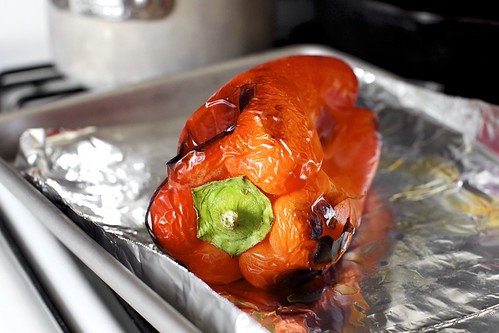
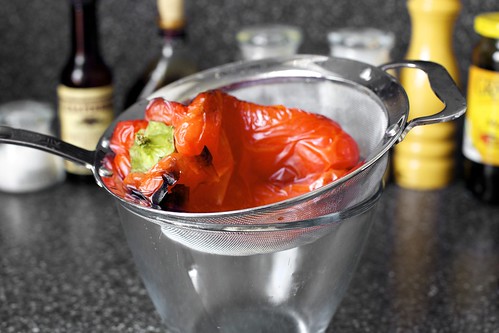
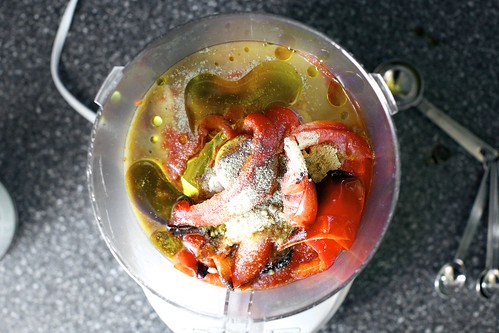
charred pepper steak sauce
charred pepper steak sauce
via smitten kitchen by deb on 8/7/12
This is Alex's birthday week, which, in case you're new here, means that there's an open package of bacon in the fridge, the promise of oysters, shrimp cocktail, small-batch bourbon and babysitters on the horizon, butter and chocolate will soon align to meet their many-candled cake destiny and I, well, I bought some steak. I bet you'd imagine that a guy married to gal who likes to cook things that make people happy would be frequently entitled to his favorite food on earth, made at home, just because it's a Tuesday. Well, once every year or so, that is exactly what happens.
This is also that point in the summer where pretty much every human being I know is either at their own beach house or a guest in someone else's right now. If you're in the former category, well, la-de-dah, okay? If you're in the latter category, I know a secret: You are totally going to get invited back next year because I have just the hostess gift for you to bring. You're welcome.
... Read the rest of charred pepper steak sauce on smittenkitchen.com
© smitten kitchen 2006-2012. | permalink to charred pepper steak sauce | 69 comments to date | see more: Meat, Peppers, Photo, Quick, Summer
pink lemonade bars
pink lemonade bars
via smitten kitchen by deb on 8/3/12
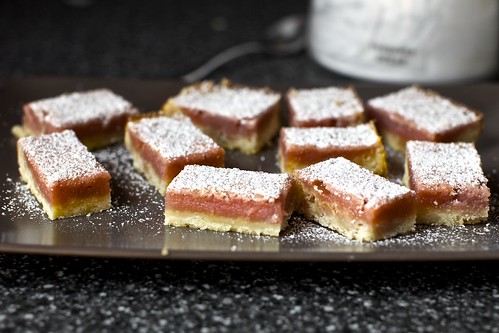
Last year, not seconds after putting the final touches on what I certain was The Lemon Bar To End All Lemon Bars, a recipe intended for that little cookbook I wrote, I couldn't quite change the station and became immediately absorbed in making something I wanted to call a pink lemonade bar. They'd be as awesome as a summer carnival, the kind that rolls into town with sketchy rides that your parents forbid you to go on but you do so anyway (or so a friend once told me!), or maybe a play date at the friends house whose mom served prettier, thus cooler, lemonade than what you had at home. I had great plans for these bars, I just had one tiny problem: I had no idea what made pink lemonade pink.
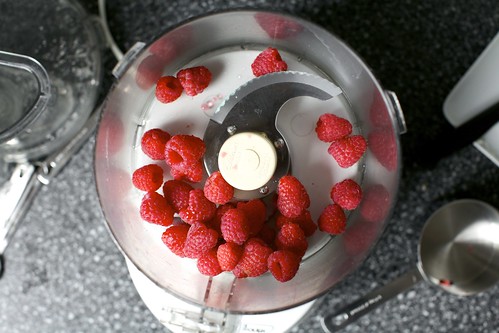
I don't mean that I am naive; I was aware that in 99 percent of the iterations of pink lemonade out there, the pink was supplied by food dye. I was also bummed to learn that some other people had thought to make pink lemonade bars first — being the type who still clings to the silly notion that there are new, uncharted waters to bake our ways through — but the vast majority of the recipes called for red food dye too. Surely, before pink lemonade was made with red food dye, it was made with a fruit of sort, like strawberry or raspberry or cherries, right? Since last summer, this article has been written but even it doesn't come to a singular conclusion as to what should make pink lemonade pink. The only thing that is apparent among its discussions of clothing dye and red hot candies is that if you can make it with something natural and/or tasty, you're probably improving upon its lineage.
... Read the rest of pink lemonade bars on smittenkitchen.com
Saturday, December 10, 2011
nutmeg maple butter cookies | smitten kitchen
nutmeg maple butter cookies | smitten kitchen
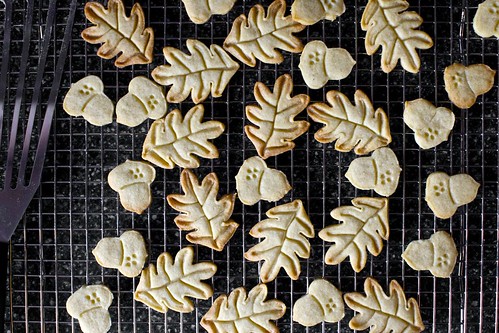
Nutmeg Maple Butter Cookies
Adapted, just a smidge, from the late great Gourmet Magazine
Adapted, just a smidge, from the late great Gourmet Magazine
1 cup (2 sticks or 226 grams) unsalted butter, at room temperature
1 cup (200 grams) granulated sugar
1/2 cup (118 ml) maple syrup (Grade B is ideal here, but the original recipe suggested that Grade A with a few drops of maple extract would also work)
1 large egg yolk
3 cups (375 grams) all-purpose flour
1/2 teaspoon freshly grated nutmeg or 1/4 teaspoon ground nutmeg (because it packs more tightly)
1 1/4 teaspoon flaky salt or 1 teaspoon table salt
1 cup (200 grams) granulated sugar
1/2 cup (118 ml) maple syrup (Grade B is ideal here, but the original recipe suggested that Grade A with a few drops of maple extract would also work)
1 large egg yolk
3 cups (375 grams) all-purpose flour
1/2 teaspoon freshly grated nutmeg or 1/4 teaspoon ground nutmeg (because it packs more tightly)
1 1/4 teaspoon flaky salt or 1 teaspoon table salt
Using an electric mixer, beat butter and sugar together until light and fluffy. With mixer running, add yolk and slowly drizzle in maple syrup. In a separate bowl, whisk together flour, nutmeg and salt. Add to butter mixture and mix until just combined. The dough will be in loose clumps. Gather them together into a tight packet with a large piece of plastic wrap and chill dough for at least two hours (and up to four days) until firm.
Preheat oven to 350 degrees and line a few baking sheets with parchment paper. I like to roll out a quarter to half the dough at a time, leaving the rest in the fridge. On a floured counter, roll dough to 1/8-inch thickness and cut into desired shapes.
(I started with conservative circles, moved into ridged circles, then maple leaves and then, after reading a fascinating article about the acorn harvest this year, got forrest-ed away with acorns and oak leaves that a reader sent me a few years ago. Not that you asked any of this.)
Arrange cookies on baking sheets and bake for 8 to 11 minutes each, or until lightly golden at the edges. Transfer to racks to cool. Cookies keep in airtight containers for a week, or in the freezer until their dance number is up.
Tuesday, December 06, 2011
Cook Perfect Rice Without a Rice Cooker (and Store It for Quick Reheating) [...
Cook Perfect Rice Without a Rice Cooker (and Store It for Quick Reheating) [Food]
via Lifehacker by Adam Pash on 12/5/11Most people who make a lot of rice swear by rice cookers, but food blogger Darya Pino (and me, actually) have had mixed experiences. So, instead of relying on inconsistent rice-cooker results, Pino set out to find how to cook perfect rice without a rice cooker. More »
Friday, December 02, 2011
The Hitchhiker's Guide to Ancient Cookery
The Hitchhiker's Guide to Ancient Cookery
http://www.aspiringluddite.com/
http://www.godecookery.com/
A list of medieval cookery sites...
http://www.aspiringluddite.com/
http://www.godecookery.com/
A list of medieval cookery sites...
Tuesday, October 04, 2011
Fig, Caramelized Onion, and Bacon Jam
Fig, Caramelized Onion, and Bacon Jam
via The Volokh Conspiracy by Eugene Volokh on 10/3/11(Eugene Volokh)
A delicious-looking recipe from my friend Kristina Johnson (Former Chef).
10 oz of bacon, thick sliced
2 large onions, sliced thin
2 teaspoons roasted garlic
1 teaspoon smoked paprika
2 teaspoons coriander seeds, crushed
2 cups stewed figs
1/3 cup white balsamic (or any mild sweet white wine vinegar)
1/4 cup sugar
2/3 cup strong brewed coffee
1. Fry bacon carefully until brown on both sides but NOT too crisp.
2. Add the sliced onions in the bacon fat and cook until caramelized.
3. When the onions are done, add the coarse chopped bacon back in and then add in the roasted garlic, smoked
paprika and crushed coriander seeds. Cook for t 2-4 minutes. Remove from heat. Let cool slightly, about 10
minutes.
4. Put the onion/bacon mix into food processor and give it 2-4 pulses, just to chop slightly. Return the mix to the
pan.
Note; If you don’t have a food processor, you can rough chop it on a cutting board.
5. Add the well stewed figs, the vinegar, the sugar and the coffee.
6. Bring to a low simmer, cover and cook until thick, about half an hour. The jam will thicken more on cooling.
7. Cool completely in the refrigerator. Store in small air tight containers in the refrigerator. Take out a small
amount and allow to come to room temp before using for best flavor.
Yields about 3 cups.
Please note; the jam cannot be processed using water bath method because it contains meat.
Thursday, July 28, 2011
Fast, Delicious Coconut Curry Chicken
via The Anchoress on 7/27/11Found this recipe in a magazine that I never subscribed to but somehow landed in my mailbox, and made it last night to family raves.It was really, really fast, really easy and really good! I'm only sorry I didn't take a pic to show you, but shredded coconut is pretty enough! 3 Tbsp. butter, melted 1 c [...]
Wednesday, March 17, 2010
Sous-Vide 101: Prime Steak Primer
You may have seen it on Iron Chef -- vacuum seal meat in plastic bags and then cook it in an immersion cooker with the water temperature precisely controlled. Serious Eats has a primer on the use of the immersion cooker for steak. Sous-Vide 101: Prime Steak Primer | Serious Eats
Finally, anyone with a bit of cash (or a generous friend or two) can produce perfectly cooked proteins without fail—chicken with a juiciness the Colonel's wife only dreamed of, and the kind of double-thick pork chops that would've made me break out a celebratory PBR mid-service, had I been able to produce it when I was a line cook.
Unfortunately, there aren't too many practical resources for home cooks now that they've actually got the damn machines. Hopefully, this new recipe series will shed some light on sous-vide cookery basics.
Tuesday, January 12, 2010
Menu Labeling, Meet Digital Gastronomy
Holy S**T! It's a food-jet printer!
Menu Labeling, Meet Digital Gastronomy
There are a lot of problems with requiring that restaurants include calorie counts on their menus and placards. But one of the biggest is that it's very difficult get accurate measurements day to day, chef to chef, and dish to dish. If the rest of the nation goes the way of the Big Apple—and it looks like it might, thanks to some provisions hidden in the health care bill—and gets tough on menu boards, restaurateurs are going to need some technological help with the compliance. Food testing is expensive and time consuming. But what about food synthesis?
Behold a new project from MIT's Fluid Interface Group, Cornucopia:
Cornucopia is a concept design for a personal food factory that brings the versatility of the digital world to the realm of cooking. In essence, it is a three dimensional printer for food, which works by storing, precisely mixing, depositing and cooking layers of ingredients.
Cornucopia's cooking process starts with an array of food canisters, which refrigerate and store a user's favorite ingredients. These are piped into a mixer and extruder head that can accurately deposit elaborate combinations of food. While the deposition takes place, the food is heated or cooled by Cornucopia's chamber or the heating and cooling tubes located on the printing head.
And here's the part New York mayor Michael Bloomberg and molecular gastronomist Ferran Adrià will both love:
This fabrication process not only allows for the creation of flavors and textures that would be completely unimaginable through other cooking techniques, but it also allows the user to have ultimate control over the origin, quality, nutritional value and taste of every meal.
Note to Michael Pollan: Your grandmother certainly wouldn't recognize this.
Via John Inderdohnen

Friday, November 06, 2009
Tippling through the Ages
From: The Scientist
Among the few cultural traditions shared by human populations across time and geography is the abiding urge to make and consume alcoholic beverages. Alcohol was also one of the first medicines as well as a component of many early religious practices. But modern humans' choices are limited to a few alcoholic staples -- beer, wine, and "hard" liquor. Many of the beverages enjoyed by cultures past have been lost to the historical record.
Patrick McGovern, a University of Pennsylvania researcher who describes himself as a biomolecular archeologist, and Sam Calagione, founder and president of Delaware-based Dogfish Head Brewery, aim to rescue some of these forgotten brews using a mixture of science and craftsmanship.
The story of their collaboration began, McGovern said at a recent lecture at the University of Pennsylvania Museum of Anthropology and Archaeology, with the discovery of a burial mound -- called a tumulus -- marking the eternal resting place of one of history's most famous kings. "Right upstairs, the debris from the Midas tumulus was waiting for me in small paper bags," he said. Fifty years ago University of Pennsylvania archaeologists had excavated the tumulus, located in eastern Turkey, and stored debris from vessels upstairs at the Philadelphia museum.
"[I was interested in analyzing] the intense yellowish residue in a sort of reverse engineering to try and resurrect old ingredients," McGovern explained. Using mass spectrometry and liquid chromatography, he determined that the ancient residue was a mixture of barley, honey and grapes. Since the subject of ancient beverages is dear to his heart and his palate, he explained, the next step was obvious -- "Why not try to recreate some of these ancient beverages?" For help, he turned to Calagione, who used equal proportions of the ingredients with saffron as the bittering agent to brew Midas Touch, which approximates the drink that likely flowed at celebrations or funerals during the time of the ancient king. McGovern suggested the use of saffron because hops would not have been used in Midas' time, and he thought the spice might account for the intense yellow in the residue. Midas Touch is an ale beautiful to behold and with a complex set of flavors; King Midas would have found it more than acceptable.
This first success merely whetted McGovern's thirst for reconstructing ancient fermented beverages. "The story of early mankind is humans figuring out how to chew all kinds of carbohydrates: stems, grains, roots, fruit, [looking for] what's fermentable, and that's led to a whole slew of beverages around the world," he noted. Specifically, it led McGovern to chicha -- a corn beer that's been consumed in South America for centuries -- which Calagione has also recreated at Dogfish Head. Chicha is brewed with corn that's first been chewed, human saliva acting as a fermenting agent in the brewing process. (The brewing process destroys harmful bacteria.)
McGovern and Calagione have also recreated a 3,200-year-old cacao-based ale called Theobroma, the recipe for which McGovern unearthed in Honduras. It does not taste chocolatey; rather it has an earthy flavor, a good fall brew that would pair nicely with stews or soups.
Calagione has recreated McGovern's earliest discovery (so far) of humankind's affair with alcohol. At its Delaware brewpub, Dogfish Head offers Chateau Jia Hu, which is based on a 9,000-year-old Chinese drink whose ingredients McGovern deciphered by analyzing ancient pottery sherds from an area called Jiahu, in China's Yellow River basin. He determined that Chinese rice, honey and hawthorn fruit had made the beverage.
So many ancient drinks have been resurrected by McGovern and Calagione that the researcher has written a book that takes readers all over the world in his search for man's earliest fermented beverages. McGovern places his research in the cultural context of each civilization and in doing so reveals arcane gems. For example, "the human foot, it seems, is ideally configured to extract the juice [of the grape] without breaking the seeds that introduce bitter tannins," McGovern writes in one chapter.
Uncorking the Past: The quest for wine, beer and other alcoholic beverages Patrick E McGovern, University of California Press, 348 pp. 38 illustrations, ISBN: 978-0-520-25379-7. $29.95.
Patrick McGovern, a University of Pennsylvania researcher who describes himself as a biomolecular archeologist, and Sam Calagione, founder and president of Delaware-based Dogfish Head Brewery, aim to rescue some of these forgotten brews using a mixture of science and craftsmanship.
The story of their collaboration began, McGovern said at a recent lecture at the University of Pennsylvania Museum of Anthropology and Archaeology, with the discovery of a burial mound -- called a tumulus -- marking the eternal resting place of one of history's most famous kings. "Right upstairs, the debris from the Midas tumulus was waiting for me in small paper bags," he said. Fifty years ago University of Pennsylvania archaeologists had excavated the tumulus, located in eastern Turkey, and stored debris from vessels upstairs at the Philadelphia museum.
"[I was interested in analyzing] the intense yellowish residue in a sort of reverse engineering to try and resurrect old ingredients," McGovern explained. Using mass spectrometry and liquid chromatography, he determined that the ancient residue was a mixture of barley, honey and grapes. Since the subject of ancient beverages is dear to his heart and his palate, he explained, the next step was obvious -- "Why not try to recreate some of these ancient beverages?" For help, he turned to Calagione, who used equal proportions of the ingredients with saffron as the bittering agent to brew Midas Touch, which approximates the drink that likely flowed at celebrations or funerals during the time of the ancient king. McGovern suggested the use of saffron because hops would not have been used in Midas' time, and he thought the spice might account for the intense yellow in the residue. Midas Touch is an ale beautiful to behold and with a complex set of flavors; King Midas would have found it more than acceptable.
This first success merely whetted McGovern's thirst for reconstructing ancient fermented beverages. "The story of early mankind is humans figuring out how to chew all kinds of carbohydrates: stems, grains, roots, fruit, [looking for] what's fermentable, and that's led to a whole slew of beverages around the world," he noted. Specifically, it led McGovern to chicha -- a corn beer that's been consumed in South America for centuries -- which Calagione has also recreated at Dogfish Head. Chicha is brewed with corn that's first been chewed, human saliva acting as a fermenting agent in the brewing process. (The brewing process destroys harmful bacteria.)
McGovern and Calagione have also recreated a 3,200-year-old cacao-based ale called Theobroma, the recipe for which McGovern unearthed in Honduras. It does not taste chocolatey; rather it has an earthy flavor, a good fall brew that would pair nicely with stews or soups.
Calagione has recreated McGovern's earliest discovery (so far) of humankind's affair with alcohol. At its Delaware brewpub, Dogfish Head offers Chateau Jia Hu, which is based on a 9,000-year-old Chinese drink whose ingredients McGovern deciphered by analyzing ancient pottery sherds from an area called Jiahu, in China's Yellow River basin. He determined that Chinese rice, honey and hawthorn fruit had made the beverage.
So many ancient drinks have been resurrected by McGovern and Calagione that the researcher has written a book that takes readers all over the world in his search for man's earliest fermented beverages. McGovern places his research in the cultural context of each civilization and in doing so reveals arcane gems. For example, "the human foot, it seems, is ideally configured to extract the juice [of the grape] without breaking the seeds that introduce bitter tannins," McGovern writes in one chapter.
Uncorking the Past: The quest for wine, beer and other alcoholic beverages Patrick E McGovern, University of California Press, 348 pp. 38 illustrations, ISBN: 978-0-520-25379-7. $29.95.
Tuesday, June 09, 2009
Weed Eater
It used to be a brand of trimmer. Now, it's an increasing number of people with salad greens in their lawns. (WSJ)
As suburban homeowners commence their annual battle against weeds, more people are paying top dollar to eat them. The dandelion -- perhaps the most common weed of them all -- is seeing a huge surge in sales at grocery stores. Other long-scorned greens making the leap to the dinner table include purslane, lamb's quarters and stinging nettles, a skin-irritating plant that can be eaten safely after boiling.
....
Until the mid-20th century, greens such as wild onions, pokeweed and sorrel were eaten in many parts of the U.S. "The wild plants and the weeds were more commonly eaten until World War II, when they were seen more in disdain and processed foods began to move up," says James A. Duke, a former Agriculture Department researcher who has written a book on edible weeds.
Saturday, January 24, 2009
Recipe
From the Wall Street Journal
Singapore Pineapple Tarts
Yields about 100 tarts
Quantities aren't exact. My aunts don't use a recipe, and they laughed at me the first 10 times I asked them for this one. The first set of instructions they gave me for pineapple jam was, "Aiyah, you just juice the pineapple, add sugar and then boil, boil, boil!"
For the jam:
4 pineapples
at least ½ kilogram sugar (at least 2 ½ cups, depending on desired sweetness)
2 to 3 pandan leaves* knotted together
1 long cinnamon stick, broken in two
- Peel the pineapples, dig out the eyes and chop into chunks. Run the chunks through a juicer. Place the pulp in a large wok or pot with a large surface area and heat on the stove. Add the juice until the mixture has the consistency of porridge or grits; add the knotted pandan leaves and cinnamon stick. Bring to a boil and keep it there for a total of three hours, stirring often. Halfway through, taste the jam, and add sugar by the half cup until it is as sweet as you desire. (Note: The amount of sugar needed will vary greatly depending on how ripe the pineapples are.)
- The jam is done when the pineapple mixture has changed color from bright yellow to brownish ochre and most of the liquid has evaporated, leaving a dense but moist jam.
*Pandan leaves, also called screwpine, can be found frozen in some Asian grocery stores. They are available fresh at http://grocerythai.com/pandan-leaf-p-769.html and http://www.templeofthai.com/food/fresh/pandanusleaf-1000000274.php
For the pastry:
375 grams salted butter (3 sticks plus 2 ½ Tablespoons) at room temperature
600 grams flour (about 4 ¾ cups)
4 egg yolks, plus 1 yolk for brushing onto pastry
- With a mixer on low speed, combine the butter, flour and four egg yolks, mixing for 3 to 5 minutes.
- Place dough in a cookie press fitted with a disc featuring a circle of diamonds. Press cookies out onto greased baking sheets. Form small balls of dough and press each one into the hollow of a cookie, forming the base of the tart.
- Beat the remaining egg yolk with ½ teaspoon of water. Brush the rim of each tart generously. Take a scant teaspoon of pineapple jam (more or less, as desired) and form a ball, then press into the hollow of each tart. Pat the sides of the jam to create a small dome.
- Bake for 15 to 20 minutes at 350 degrees, until golden brown. Remove cookies from sheets and cool on a rack.
Friday, January 09, 2009
Sea Kittens
Michelle Malkin has linked to a PETA campaign aimed at renaming fish "sea kittens".
Well, I like most fish I've had, including catfish. Maybe young catfish would be called "river kittens"?
Anyway, for those who might want to try frying up some sea kittens, here's a recipe I use for tilapia. (And it would probably work on catfish, too -- or any light fish.)
1 1/2 lb tilapia fillets
1/2 cup flour
2 tbsp white pepper
2 tbsp garlic powder
2 tbsp garam masala
1 tbsp salt
butter for frying
olive oil for frying
Melt the butter in a frying pan with some olive oil (helps keep the butter from burning).
Mix the flour and spices and pour into a shallow bowl or plate.
Dredge the fillets through the flour, coating both sides.
Place the fillets in the hot oil and fry on both sides, for a total of 10 minutes per inch of thickness.
Serve
This is great as is, or with a sauce. The residual oil/butter mix in the frying pan can be mixed with some of the flour mix to make a good gravy.
Next week, we'll try something with shrimp, hereinafter referred to as "ocean puppies".
Monday, October 27, 2008
Neat cookbook!
The authors of this book attempt to provide a unified theory of flavor as a guide to preparing recipes and whole menus. I found it a neat book.
While we're at it, here are some other books I strongly recommend.
Thursday, October 16, 2008
Great comment!
Eugene Volokh has a post discussing whether tomatos are fruits or vegetables.
One commenter wrote:
The difference between intelligence and wisdom:Intelligence - knowing tomatoes are fruitWisdom - knowing not to put them in fruit salad
Sunday, June 17, 2007
Wednesday, June 13, 2007
It's interesting to see where press releases wind up
A copy of my press release for the cookbook I wrote, almost a year ago now.
Saturday, July 15, 2006
I've written a book!
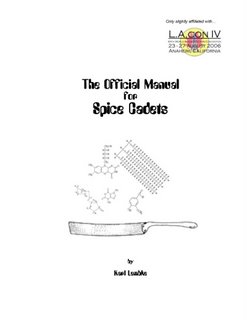
The Official Manual for Spice Cadets is now up for sale.
Written for the 64th World Science Fiction Convention, this is a collection of great recipes from the author and from a multitude of his friends and acquaintances. This book also captures the zany spirit of science fiction fandom and is a fun read, even if you never use any of the recipies it contains.
If you can't make it to the Worldcon, you can buy a piece of it today.
Subscribe to:
Posts (Atom)